


Prostatic inflammation has been increasingly diagnosed recently.But if previously the disease was found in men over 40 years old, now it often occurs in younger people.The reasons may be infections, viruses, low immunity, sedentary lifestyle, etc.Therefore, the drugs used to treat prostatitis will be diverse.You can choose the most effective medication only after a thorough review with your doctor.

Drug type
All drugs exist in various release forms.For prostatitis in men, injections, tablets, suppositories, ointments and drops are available.In the acute phase, injections are required, while medications for chronic prostatitis are usually available in tablets and capsules.Among them, antibiotics and anti-inflammatory drugs are mandatory.The former includes the most effective drugs, such as fluoroquinolones, penicillins, and tetracyclines.If a specific infection is detected, other antibiotics may be prescribed.
Anti-inflammatory drugs can be used in any form of pathology, both in the presence and absence of bacteria.Their main goals: relieve inflammation and improve organ function.You can also take painkillers and vitamins in tablet form.But immunomodulators and drugs that speed up regeneration are usually produced in the form of injections.This injection is usually done outside of the acute phase to restore prostate tissue.
In addition to the above-mentioned medications, suppositories and rectal creams are also used in male treatment.These are the most convenient form and allow you to act directly on the source of inflammation.Anti-inflammatories, analgesics, antibiotics, etc. are all available in the form of suppositories.
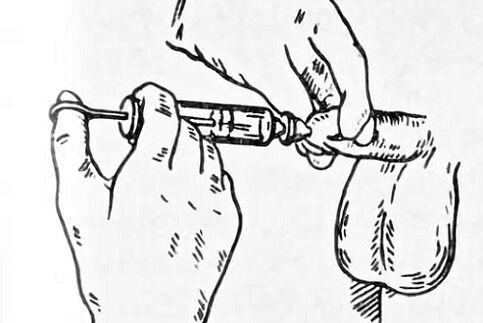
In some cases, an instillation may be required.The volume of drug injected into the urethra should not exceed 5 ml.
The choice of drug form is made exclusively with the doctor based on the stage of the pathology and its characteristics.You cannot substitute tablets or suppositories for injections on your own.
Main principles of treatment
To achieve the desired results, complex treatments are required.You can't just use antibiotics or painkillers.Usually, the treatment regimen for acute processes includes the following drugs:
- Use antibiotics to eliminate pathogenic flora;
- anti-inflammatory drugs;
- analgesics and antispasmodics used to treat severe pain;
- Suppositories relieve local inflammation.

In addition to the above-mentioned drugs, other classes of drugs can also be used, such as hormonal drugs, alpha-blockers, immunomodulators, muscle relaxants, etc.Each drug has its own duration and dosage.They are determined based on the characteristics of the product and its effects.
When identifying bacterial prostatitis in men, antimicrobial drugs are necessary.For example, for the chronic form, it needs to be taken for one week to two months.If inflammation is severe, injections may be used, but pills are more common.The choice is made based on the available flora and the patient's individual characteristics.
Anti-inflammatory drugs may also be used to treat any form of prostatitis.Even if prostate stones are present, they can help relieve inflammation.Treatment usually lasts no longer than 14 days, but longer courses are also available.
Painkillers are only used for severe pain.Generally, a three-day dose during the acute phase is sufficient.Both tablets and injections are available.If a chronic process is present in men, the use of these drugs is not necessary.
In the acute course, alpha-blockers as well as analgesics are used for 2-3 days.The same applies to antispasmodics.
At the same time, some drugs need to be taken long-term, regardless of the pathological stage.First of all, men should take vitamins and trace elements regularly, and a course of immunomodulators should be taken twice a year.Use hormones only as prescribed by your doctor after a thorough examination.
Throughout your life, you can regularly attend classes using herbal preparations and traditional medicine recipes.They will help normalize gland function and strengthen the immune system, thereby reducing the risk of recurrence.
Drug name
Among the many medications, we place special emphasis on those that are very effective and have proven effectiveness in men with acute or chronic prostatitis.Penicillin-based antimicrobials are often prescribed, which work well against a wide range of bacteria and do not cause side effects.
Additionally, other medications are available such as penicillin in injection form, tetracycline in tablet form, antispasmodics, etc.In addition, there are many analogues, so only a doctor can name the appropriate drug.
In addition to antibacterial drugs, drugs with significant antibacterial and anti-inflammatory properties are also used.In addition, it normalizes the flow of urine and blood circulation in the tissues.Promotes the absorption of blood clots and stimulates the work of muscle tissue.For chronic forms of the disease.It may also be prescribed after surgery.
Other medicines
In addition to the above-mentioned drugs, other drugs can also be used to treat prostatitis in men.Therefore, using homeopathic remedies can relieve inflammation and improve blood circulation in the tissues.At the same time, swelling decreases, cell nutrition improves, and urination and secretion production normalize.Only used as part of a complex.It can be taken long-term, up to six months.The drug is easily tolerated and has no side effects.
Natural medicines can be prescribed; it contains only herbal ingredients, which makes the product safe.Allowing you to quickly relieve inflammation and normalize gland function.
All medications for the treatment of men can only be prescribed by a doctor after examination.Each drug has its indications and application characteristics.Improper use can lead to worsening of the condition and side effects.